"The time of trouble such as never was"
“And at that time shall Michael stand up, the great prince which standeth for the children of thy people: and there shall be a time of trouble, such as never was since there was a nation even to that same time: and at that time thy people shall be delivered, every one that shall be found written in the book.” – Daniel 12:1
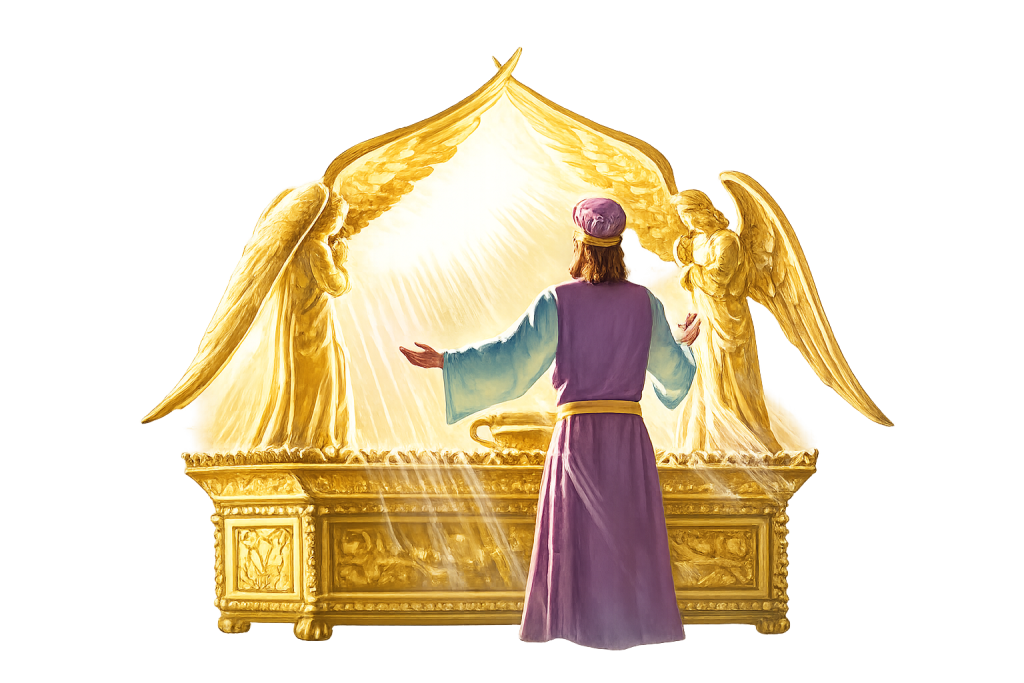
Prophecy tells us, in both the Old and New Testaments, that there will be a decisive moment in the world when the Savior will come for the second time. However, specific events must take place before the Second Coming. The most important will be the time of trouble, or time of tribulation.
“Therefore when you see the abomination of desolation, spoken of by Daniel the prophet, standing in the holy place (whoever reads, let him understand), then let those who are in Judea flee to the mountains. Let him who is on the housetop not go down to take anything out of his house. And let him who is in the field not go back to get his clothes… For then there will be great tribulation, such as has not been since the beginning of the world until this time, no, nor ever shall be.” — Matthew 24:15–21
A key requirement for this period of tribulation to begin is something Jesus and the prophet Daniel described as the abomination of desolation. This term is understood as the establishment of pagan worship or authority in place of God’s authority.
When Jesus spoke to the apostles about the end times, He was speaking to them in two ways: first, about the time in which they were living and second, in the end times. We know this because Jesus directly told the apostles that when they saw the abomination, they should flee from Judea. Likewise, the application would also take place in the future, but in a different way and on a global scale.
The first fulfillment of this prophecy occurred in A.D. 70, with the Roman siege of Jerusalem. In A.D. 66, Roman forces had surrounded the city; however, they suddenly withdrew for no apparent reason:
“After surrounding the city, the Romans, under Cestius, unexpectedly withdrew when everything seemed favorable for an immediate attack. The Christians recognized this as the promised sign and fled.” — The Great Controversy, p. 30
The Romans were pagans, and by destroying the temple and besieging Jerusalem, they would eventually establish pagan standards and beliefs:
“And now the Romans, upon the flight of the rebels into the city, and after burning the holy house (the temple) and all the buildings around it, brought their standards into the temple and set them over against its eastern gate; and there they offered sacrifices to them.” — Wars of the Jews, Book VI, Chapter 6, §1
“They bring into the holy places images which our laws forbid us to make, and force us to look upon what we would rather die than see.” — On the Embassy to Gaius
King of the North vs King of the South
“And at the time of the end the king of the North shall come against him like a whirlwind, with chariots, horsemen, and many ships; and he shall enter the countries, overwhelm them, and pass through. And he shall plant the tents of his palace between the seas and the glorious holy mountain; yet he shall come to his end, and no one will help him.” — Daniel 11:40, 45
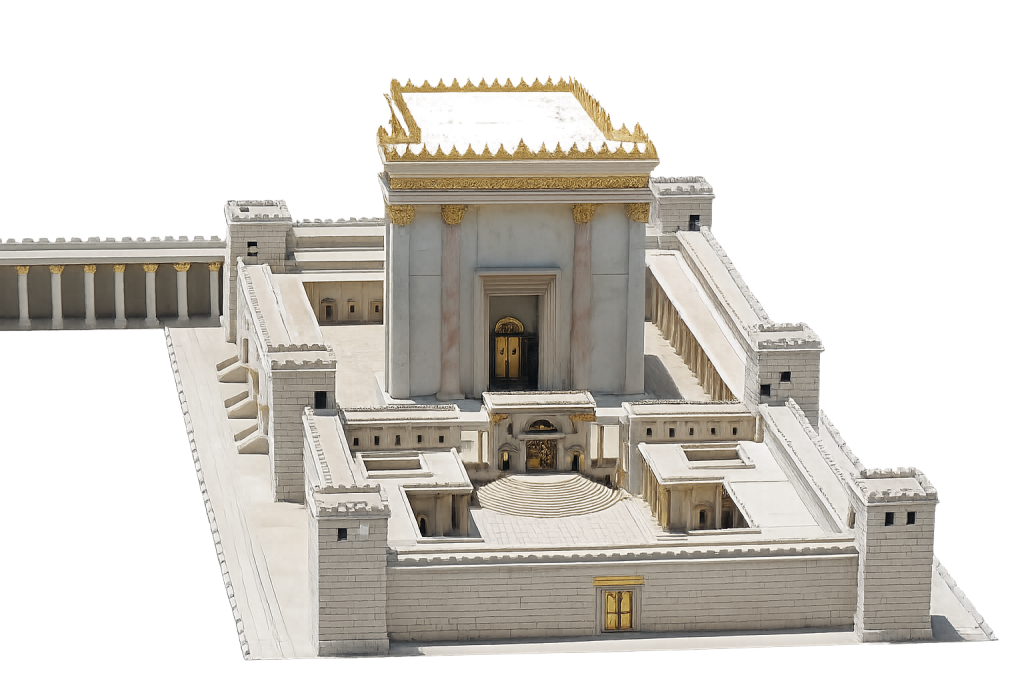
Daniel 11 gives us a picture of the events that are to occur before the end of the world. The chapter that follows, Daniel 12, warns us about a time of trouble such as never was since there was a nation, as well as about the second coming of Christ:
“But at that time your people shall be delivered, everyone who is found written in the book. And many of those who sleep in the dust of the earth shall awake, some to everlasting life, some to shame and everlasting contempt. Those who are wise shall shine like the brightness of the firmament, and those who turn many to righteousness like the stars forever and ever.” — Daniel 12:1–3
Keeping this in mind, it means that all the events of Daniel 11 are set to take place before the second coming of Christ. An important element is the King of the North planting the tents of his palace (his authority) between the seas and the glorious holy mountain (Jerusalem). Whenever the Bible speaks of the holy mountain, holy place, or holy city, we can be sure it is referring to Jerusalem. The King of the North is identified as Babylon, since it was geographically located north of Israel during the time of its theocracy.
However, the application is not only to a geographical location, but also represents whoever held power over the north of Israel. In this case, Rome, in A.D. 70 (the year the temple was destroyed), had authority over the north of Israel, and also fits the description of what happened that year: he shall be enraged against the holy covenant, profane the sanctuary and the fortress, take away the daily sacrifices, and place the abomination of desolation (Daniel 11:30–31).
What Daniel 11 describes has a double application: it happened literally in Jerusalem during the first century; however, it will happen again in our time in a similar way, though with some key concepts that distinguish it from the first application:
1. Jerusalem is a symbol of the whole world.
Just as the King of the North was once literally Babylon but now symbolically represents Papal Rome, in the same way Jerusalem once referred literally to the holy city in Israel, but in modern times it symbolizes the whole world.
Let us remember that God ended His covenant with the nation of Israel. He made this clear when He spoke against the temple: “See! Your house is left to you desolate” (Matt. 23:38). Likewise, when the prophecy of Daniel 9 tells us: “Seventy weeks are determined for your people and for your holy city.” This period represented a time of grace for the Jewish people of Israel. This period ended in A.D. 34 with the stoning of Stephen. From that moment forward, Jesus’ prophecy would be fulfilled: “not one stone shall be left here upon another” (Matt. 24:2), referring to the temple, which would be completely destroyed in A.D. 70, reflecting the end of the covenant between God and literal Israel.
2. The King of the North, who at one time was Babylon or Rome during the siege, in modern times would be considered Papal Rome or the Catholic Church.
Interestingly, the Bible calls Papal Rome: “BABYLON THE GREAT, THE MOTHER OF HARLOTS AND OF THE ABOMINATIONS OF THE EARTH” (Rev. 17:5). Even so, historians also identify that biblical writers, such as Peter, referred to Rome as Babylon:
“Peter mentions Mark in his first epistle, which they say he wrote in Rome itself, as he himself indicates when he calls the city Babylon, saying, ‘She who is in Babylon…’” — Ecclesiastical History, Book II, Chapter 15
Other sources also confirm that Rome was known as or called Babylon:
“Babylon is an ancient Rome, and Rome is a later Babylon.”
— Against the Pagans
“Babylon in Revelation is Rome.”
— Against Marcion, Book III
“We are convinced that the papacy (Papal Rome) is the seat of the true Antichrist… the Babylon of Revelation.”
— Luther’s Works, Vol. 26
Knowing this concept, and having also identified that the Papacy is the little horn of Daniel 7 and the first beast of Revelation 13, there should be no doubt that all these biblical powers are related and are consistently identified as Papal Rome. Therefore, understanding that Babylon is likewise Rome, we conclude that the King of the North mentioned in Daniel 11, in our time, would apply to the Roman Catholic Church.
The Catholic Church, or in the context of this article, the King of the North, will rise up against the King of the South. In its time, the King of the South was Egypt, since geographically it was located south of Jerusalem. In modern times, the King of the South represents secular or atheistic ideology, which sees no need for God, as expressed by Pharaoh himself when he said:
“Who is the Lord, that I should obey His voice to let Israel go? I do not know the Lord, nor will I let Israel go.” (Exodus 5:2)
In the year 1798, secular ideology surged to levels never seen before, following the overthrow of the Papacy and the imprisonment of its head, the Pope. France made the mistake that, in rejecting the Papacy, it chose to reject the very idea of God altogether, since the image of God had been tarnished by this cruel power, and getting rid of the Church meant also getting rid of the root: the Creator.
Eventually, the Bible was burned and banned, and religion was penalized. They took a prostitute and placed her on a throne, proclaiming: “There is no God; reason is our supreme deity… This is our goddess, Reason.”
“In Notre Dame a new divinity is proclaimed. The Goddess of Reason, represented by a living woman, receives the worship of the people.”
— The French Revolution: A History, Book III
“The Bible was burned and the goddess of reason was enthroned. The churches were closed and the religion of Christ was abolished by law.”
— The Great Controversy, p. 271
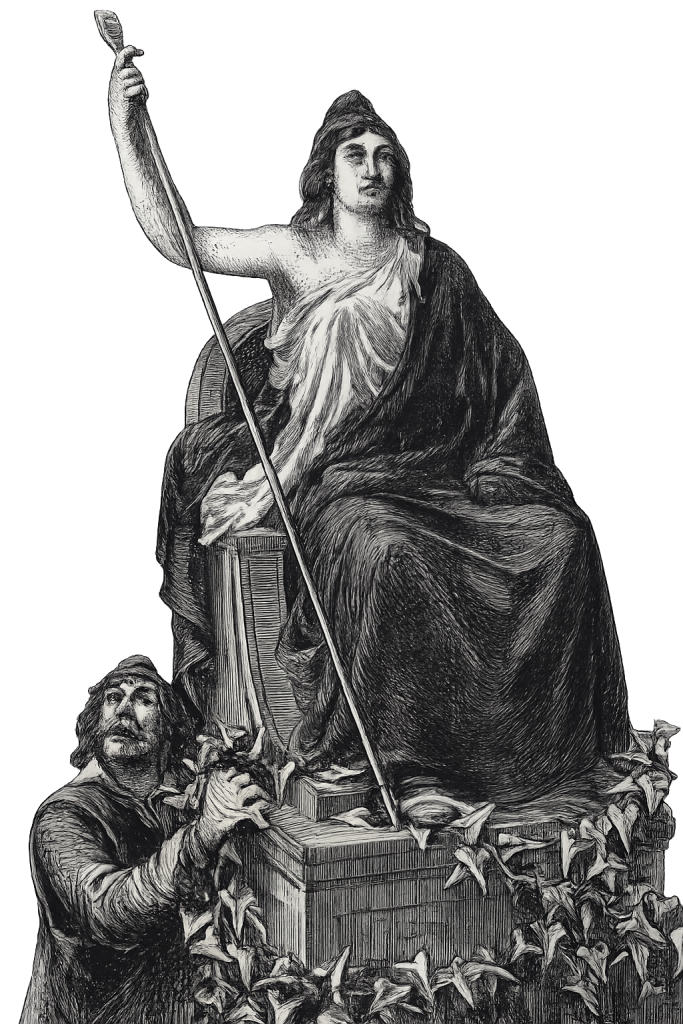
In the year 1798, secular ideology surged to levels never seen before, following the overthrow of the Papacy and the imprisonment of its head, the Pope. France made the mistake that, in rejecting the Papacy, it chose to reject the very idea of God altogether, since the image of God had been tarnished by this cruel power, and getting rid of the Church meant also getting rid of the root: the Creator.
Eventually, the Bible was burned and banned, and religion was penalized. They took a prostitute and placed her on a throne, proclaiming: “There is no God; reason is our supreme deity… This is our goddess, Reason.”
“In Notre Dame a new divinity is proclaimed. The Goddess of Reason, represented by a living woman, receives the worship of the people.”
— The French Revolution: A History, Book III
“The Bible was burned and the goddess of reason was enthroned. The churches were closed and the religion of Christ was abolished by law.”
— The Great Controversy, p. 271
From this key point in history, secularism, atheism, and agnosticism have increased. Prominent ideas such as homosexuality, transgenderism, adultery, sodomy, and other liberal ideologies have become established in our society as normal and acceptable practices, which the Bible completely rejects and which are not compatible with the revelation God has given us.
From this key point in history, secularism, atheism, and agnosticism have increased. Prominent ideas such as homosexuality, transgenderism, adultery, sodomy, and other liberal ideologies have become established in our society as normal and acceptable practices, which the Bible completely rejects and which are not compatible with the revelation God has given us.
Eventually, what prophecy tells us is that the King of the North (Catholicism) will rise against the King of the South (secularism) and will overthrow it, giving us a picture in which conservative ideas will triumph over progressive ones. There will be a false revival and a return to morality, in which the immoral concepts mentioned earlier will disappear.
“But at the time of the end the king of the South shall attack him; and the king of the North shall come against him like a whirlwind, with chariots, horsemen, and many ships; and he shall enter the countries, overwhelm them, and pass through. He shall stretch out his hand against the countries, and the land of Egypt shall not escape. He shall have power over the treasures of gold and silver, and over all the precious things of Egypt…” — Daniel 11:40–42
As we see here, the Papacy will overthrow the progressive ideas of secularism, or as the bible calls it, Egypt. These elements — “horses” and “ships” — though literal in their time, are now symbolic and represent political and economic power. There will be a strong blow against progressive countries and organizations, using political and economic means.
Eventually, what prophecy tells us is that the King of the North (Catholicism) will rise against the King of the South (secularism) and will overthrow it, giving us a picture in which conservative ideas will triumph over progressive ones. There will be a false revival and a return to morality, in which the immoral concepts mentioned earlier will disappear.
“But at the time of the end the king of the South shall attack him; and the king of the North shall come against him like a whirlwind, with chariots, horsemen, and many ships; and he shall enter the countries, overwhelm them, and pass through. He shall stretch out his hand against the countries, and the land of Egypt shall not escape. He shall have power over the treasures of gold and silver, and over all the precious things of Egypt…” — Daniel 11:40–42
As we see here, the Papacy will overthrow the progressive ideas of secularism, or as the bible calls it, Egypt. These elements — “horses” and “ships” — though literal in their time, are now symbolic and represent political and economic power. There will be a strong blow against progressive countries and organizations, using political and economic means.
(Keep in mind that this article is not intended to be political or to take sides with either the conservative or the liberal sides; we are only presenting an interpretation of the prophetic framework of Daniel 11.)
The second establishment of a pagan standard
The second establishment of a pagan standard
“And the herald cried aloud: ‘To you it is commanded, O peoples, nations, and languages… that you fall down and worship the gold image that King Nebuchadnezzar has set up; and whoever does not fall down and worship shall be cast immediately into the midst of a burning fiery furnace.’” — Daniel 3:4, 6
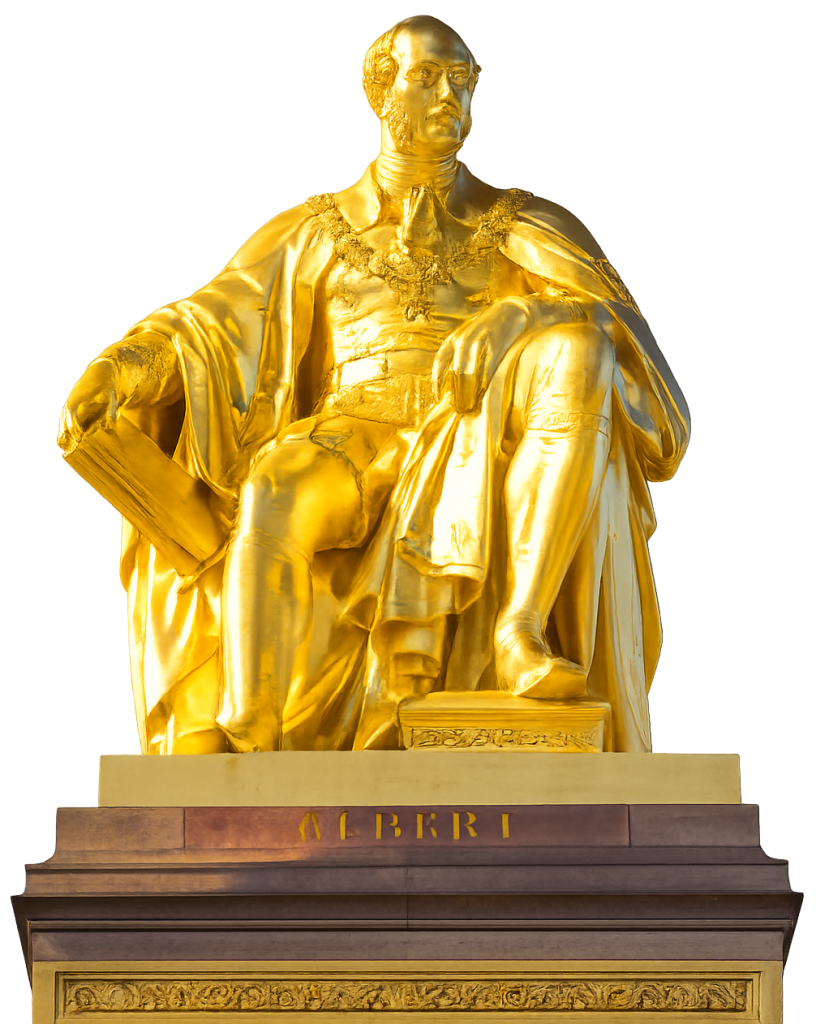
Once again, we see the description of an event that happened in the past but will be repeated in the future. In the book of Daniel we find the expression “peoples, nations, and languages,” the same one that appears in Revelation 13: “Authority was also given to the Beast over every tribe, people, language, and nation” (Rev. 13:7).
In the same way that the king of ancient Babylon, Nebuchadnezzar, set up a golden image for the world to worship, modern Babylon (Papal Rome) will establish a pagan order between the “seas and the glorious holy mountain,” which in modern times refers to God’s people and not to the literal nation of Israel.
As we have identified in this article, the Beast of Revelation 13 is the Roman Catholic Church, and its mark of authority is Sunday worship above the biblical Sabbath.
At the end of time there will be such economic tribulation and a concentration of wealth in the hands of powerful people (James 5:3). Likewise, there will be a similar moral crisis: “lovers of themselves, lovers of money, boasters, proud, blasphemers, disobedient to parents, unthankful, unholy, without natural affection, unforgiving, slanderers, without self-control, brutal, despisers of good, traitors, headstrong, haughty, lovers of pleasure rather than lovers of God” (2 Timothy 3:1–5).
The whole world will ask for a sign in order to return to its false god: “Come, make us gods that shall go before us; for as for this Moses, the man who brought us up out of the land of Egypt, we do not know what has become of him” (Exodus 32:1).
Likewise, just as a pagan order was established and the worship of foreign gods took place during the first siege of Rome against Jerusalem (A.D. 70), the same will happen in the final times, worshiping and enforcing a mark that originates in ancient Babylon, specifically sun worship. This will be manifested in Sunday observance above the biblical Sabbath that God instituted.
How is Sunday worship linked to 666?
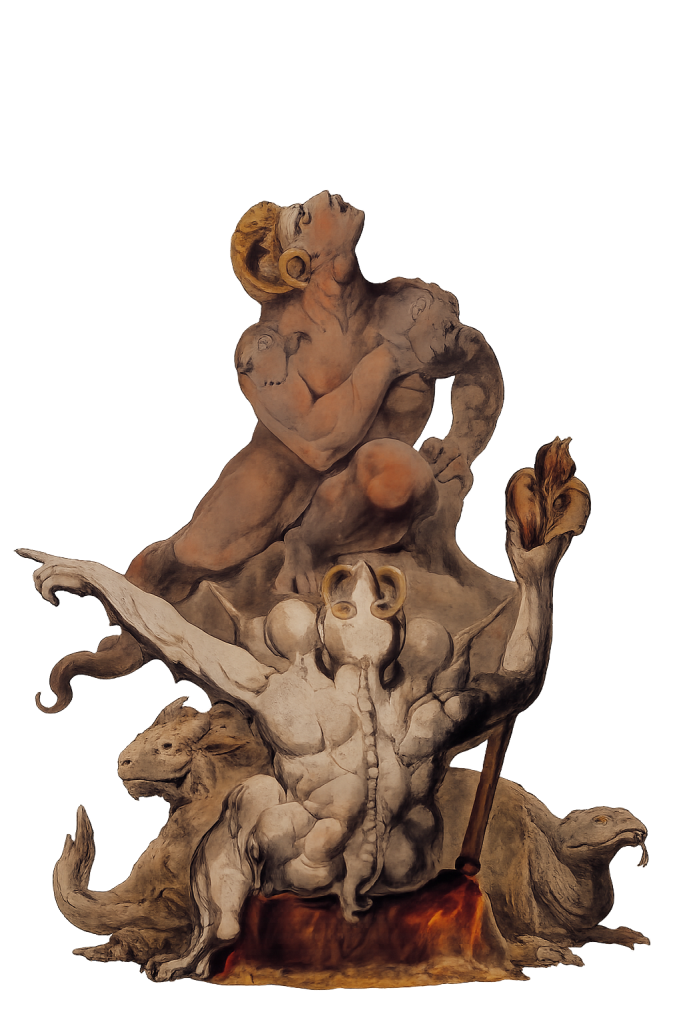
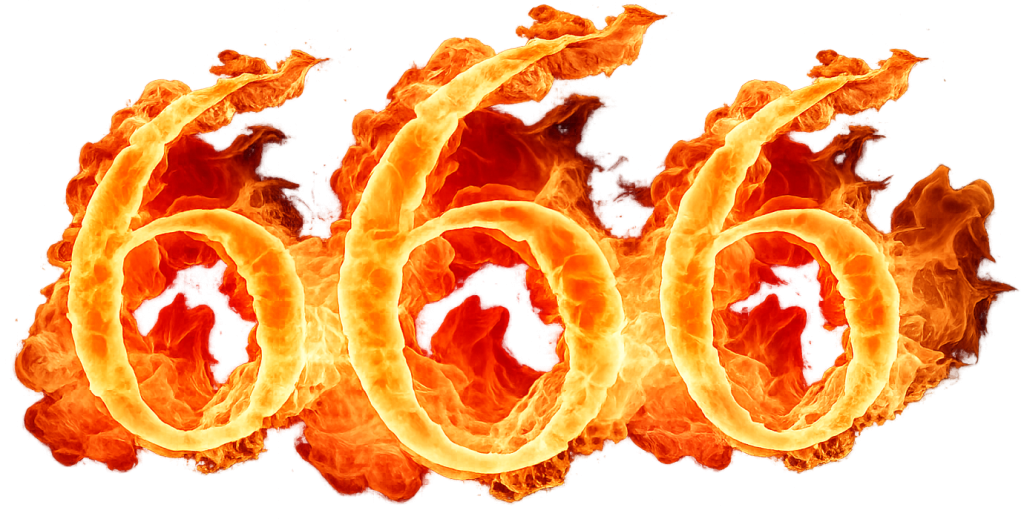
“Here is wisdom. Let the one who has understanding calculate the number of the beast, for it is the number of a man. And his number is six hundred sixty-six.” – Revelation 13:18
History shows that Babylonian priests used amulets to represent the cosmos. One of the most prominent amulets was connected to the sun god. On the front of the amulet, we could see the image of the sun above the Babylonian lion.
On the back there was something known in numerology as the “magic square of the Sun,” which had six boxes horizontally and vertically, each box containing a number. When adding the results of the six boxes, we end up with the number 666.
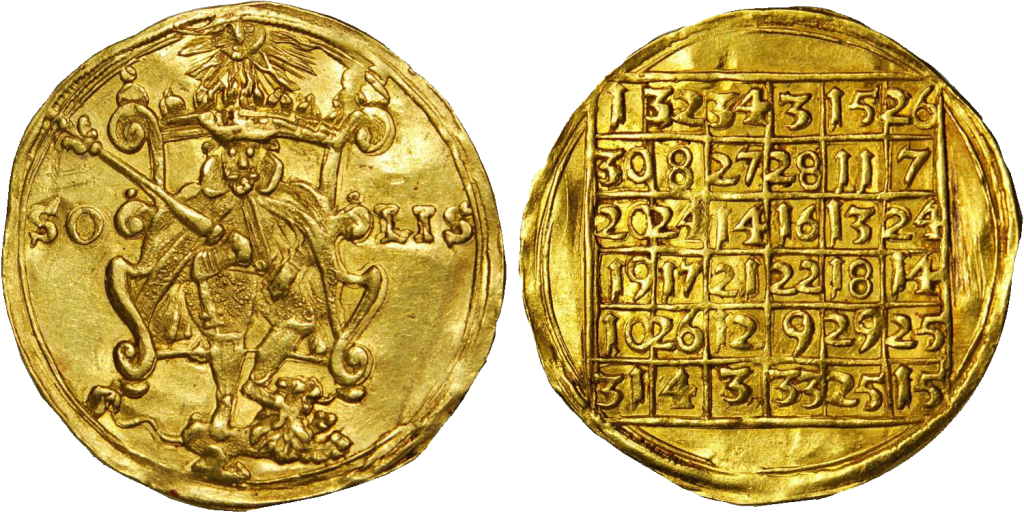
It is interesting that the Roman Catholic Church venerates the day of the sun (Sunday) and claims that this is its mark of authority. In addition, many popes have used the title “Pontifex Maximus”, which in Latin means “supreme pagan priest,” a title given to the highest-ranking priests in Babylon. In conclusion, the number 666 is rooted in sun worship, and the Church has a history of pagan origin.
Which power will enforce the Mark of the Beast?
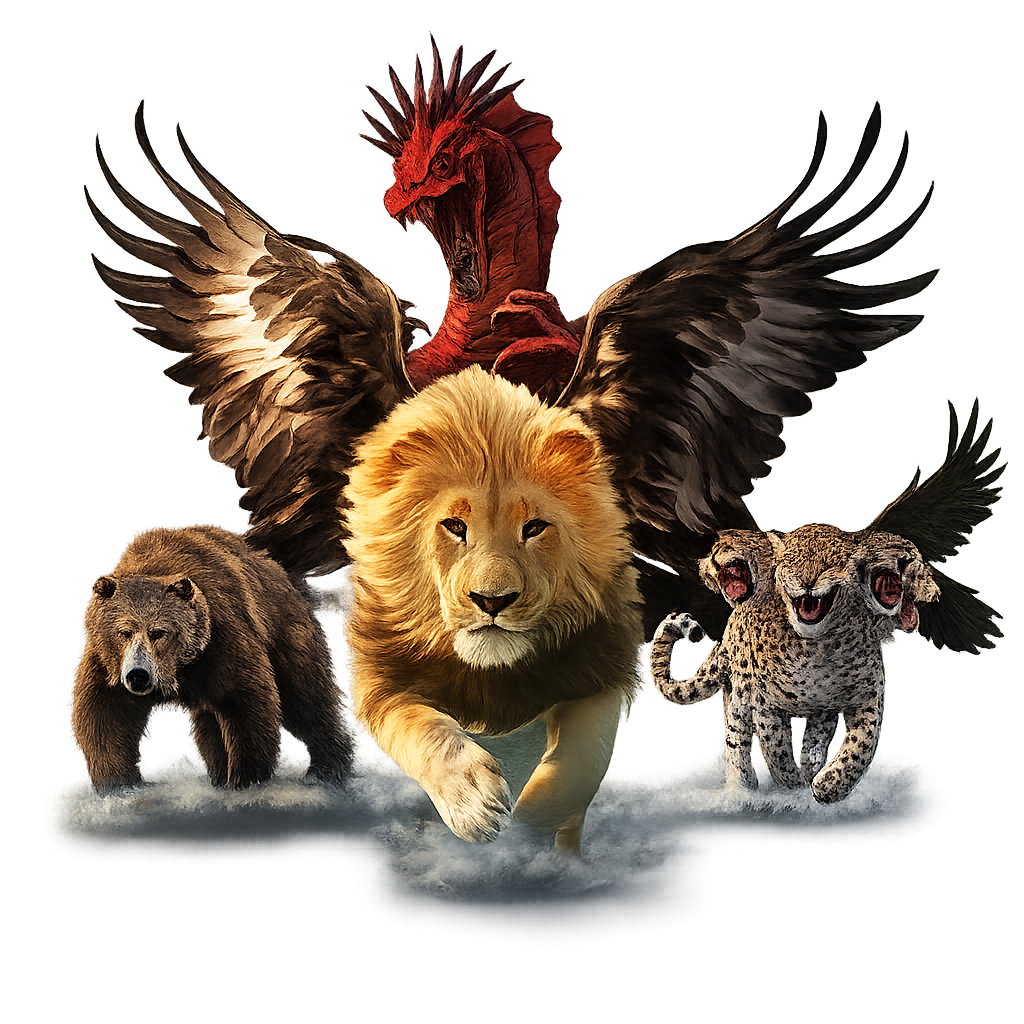
The Bible tells us which power will implement the mark of the beast, primarily in the book of Daniel, chapter 7:
Daniel 7:25 “And he shall speak great words against the most High, and shall wear out the saints of the most High, and think to change times and laws: and they shall be given into his hand until a time and times and the dividing of time.”
The Roman Catholic Church fits this description. This power is the same one that admits to having changed the solemnity of the Sabbath to Sunday:
“Sunday is our mark of authority… The (Catholic) Church is above the Bible, and this transference of Sabbath observance is proof of that fact.” — Catholic Record, September 1, 1923, London
The Roman Catholic Church also removed the second commandment (not making graven images) in the official catechism. With these two characteristics, it fits perfectly with the verse in Daniel 7 that says: “and think to change times and laws.”
The Bible tells us which power will implement the mark of the beast, primarily in the book of Daniel, chapter 7:
Daniel 7:25 “And he shall speak great words against the most High, and shall wear out the saints of the most High, and think to change times and laws: and they shall be given into his hand until a time and times and the dividing of time.”
The Roman Catholic Church fits this description. This power is the same one that admits to having changed the solemnity of the Sabbath to Sunday:
“Sunday is our mark of authority… The (Catholic) Church is above the Bible, and this transference of Sabbath observance is proof of that fact.” — Catholic Record, September 1, 1923, London
The Roman Catholic Church also removed the second commandment (not making graven images) in the official catechism. With these two characteristics, it fits perfectly with the verse in Daniel 7 that says: “and think to change times and laws.”
How will the Mark of the Beast be enforced?
The Bible tells us that the mark of the beast will have a primary factor: commerce.
“And that no man might buy or sell, save he that had the mark, or the name of the beast, or the number of his name.” (Revelation 13:17)
Those who choose to stand firm with God and keep His holy Sabbath will be penalized and will have their ability to buy and sell taken away.
We currently live in a digital age in which we are getting closer and closer to conducting business only through bank transfers, credit cards, and other digital methods, while cash is disappearing.
With only digital means of commerce, it eventually becomes much easier for authorities to freeze bank accounts, leaving people without the ability to trade, especially if we reach a cashless society.
How will the Mark of the Beast be enforced?
The Bible tells us that the mark of the beast will have a primary factor: commerce.
“And that no man might buy or sell, save he that had the mark, or the name of the beast, or the number of his name.” (Revelation 13:17)
Those who choose to stand firm with God and keep His holy Sabbath will be penalized and will have their ability to buy and sell taken away.
We currently live in a digital age in which we are getting closer and closer to conducting business only through bank transfers, credit cards, and other digital methods, while cash is disappearing.
With only digital means of commerce, it eventually becomes much easier for authorities to freeze bank accounts, leaving people without the ability to trade, especially if we reach a cashless society.
The Great Controversy.
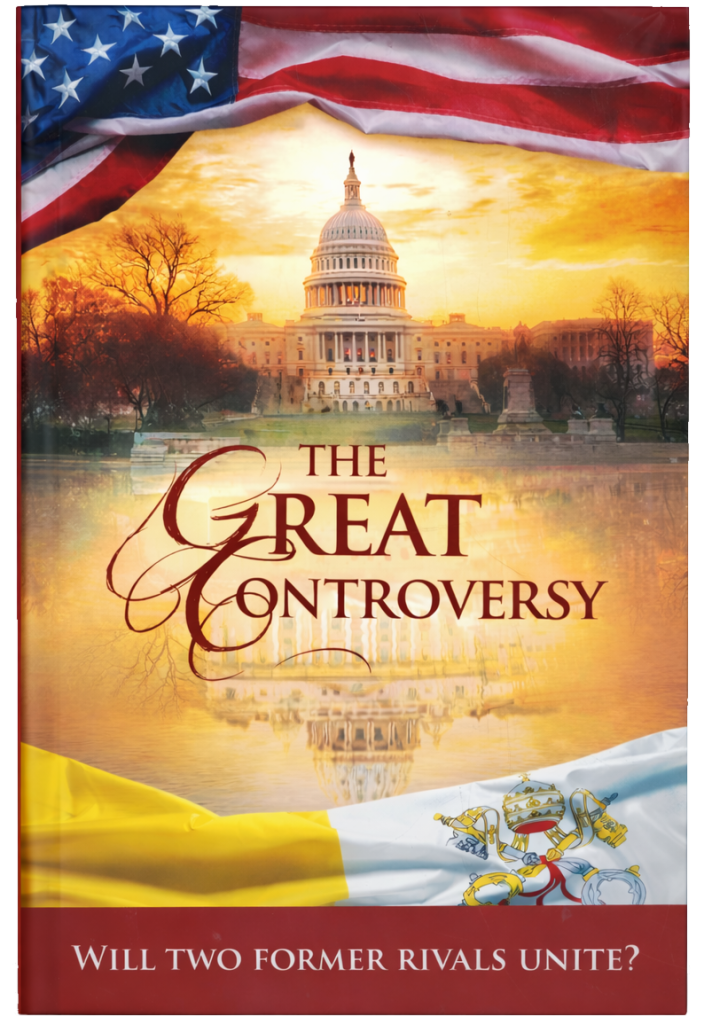
“When Sunday observance shall be enforced by law, and the world shall be enlightened concerning the obligation of the true Sabbath, then whoever shall transgress the command of God, to obey a precept which has no higher authority than that of Rome, will thereby honor popery above God. He is worshiping the beast and his image.”
— The Great Controversy

From the archaeological and historical evidence that demonstrates the Bible is a reliable and true document, to the most relevant end-time prophecies, the “Total Onslaught” series teaches us the methods of deception and assault used by Satan against Christ, and how the final events of this world will unfold.