Have the Ten Commandments been abolished?
One of the most prominent ideas we hear in the Christian world is that the Ten Commandments given to Moses in the book of Exodus have been abolished, nailed to the cross, or that they are simply no longer in effect.
But is this logically possible? Could the God of the entire universe have erased His law after thousands of years of struggle against human evil? Apparently, this is the logic that many evangelical Christians follow; however, we will explain why this cannot be correct.
First, we would have to know: When did the law start?
In general Christian thought, there is the idea that the law began with Moses or with the Jews; however, nothing could be further from the truth.
We have biblical evidence that God first instituted the fourth commandment during the first week of creation, which is the Sabbath commandment: “Thus the heavens and the earth were finished, and all the host of them. And on the seventh day God ended His work which He had done, and He rested on the seventh day from all His work which He had done. Then God blessed the seventh day and sanctified it, because in it He rested from all His work which God had created and made” (Genesis 2:1–3).
This scene takes place in the Garden of Eden, after the creation of the earth and everything in it had been completed; therefore, we know that the fourth commandment was instituted thousands of years before Moses was born or before any Jew even existed.
We can confirm with great confidence that God truly maintained a standard and a law during antediluvian times (before the Flood), because God judged the entire world by sending the Flood as a demonstration of His judgment against it. Prominent reasons the Bible gives for why the antediluvian world was destroyed include: evil thoughts, violence, corruption, racism, and wars (Genesis 6:5; Genesis 6:11; Matthew 24:37).
Likewise, Sodom and Gomorrah—two postdiluvian cities (after the Flood), but long before Moses—were also judged. Some of the main reasons for the judgment of Sodom and Gomorrah were: sexual immorality, fornication, rape, pride, gluttony, complacency, and laziness (Jude 1:7; Ezekiel 16:49; Genesis 18:20).
Now then, if God did not operate with a law or a standard, how could He have been just in judging these civilizations if they were not aware of God’s standard? A just judgment cannot be given unless the other party is aware of what the laws are. The reality is that God did have a standard, and these civilizations were truly aware of it, but they chose to ignore it and follow their own pleasures.
Noah preached for 120 years before the Flood came. Did Noah preach a restoration to morality? Of course he did; the Bible confirms it: “And did not spare the ancient world, but saved Noah, one of eight people, a preacher of righteousness, bringing in the flood on the world of the ungodly” (2 Peter 2:5).
Was the law only for the Jews?
This is another very prominent argument that many use to support the idea that the Ten Commandments are no longer in effect.
However, the law could not have been only for the Jews. The law was present for Adam and Eve; it was present for the antediluvian world; it was present for Sodom and Gomorrah, among other biblical figures who lived long before the theocracy of Israel.
Did God not institute the Sabbath and the fourth commandment in the Garden of Eden? Furthermore, there is additional evidence that the commandments were present before Exodus chapter 20, because in Exodus chapter 16 God causes manna to rain from heaven for the Israelites. For five days manna fell; on the sixth day, double the amount fell (because it was the day of preparation for the Sabbath), and on the Sabbath no manna fell on the camp at all.
This is evidence that the law was in effect four chapters before the commandments were written by God on stone and given to Moses.
Did Jesus change the commandments to only two?
“Master, which is the great commandment in the law?”
“Jesus said to him, “You shall love the Lord your God with all your heart, with all your soul, and with all your mind.” This is the first and great commandment. And the second is like it: “You shall love your neighbor as yourself.” – Matthew 22:36-40
This argument has also been used to dismiss any kind of obligation that comes with keeping the Ten Commandments as they were explicitly given on the stone tablets.
However, when Jesus answers that these are the two great commandments, He is not replacing the Ten Commandments with only two, but rather summarizing them into two.
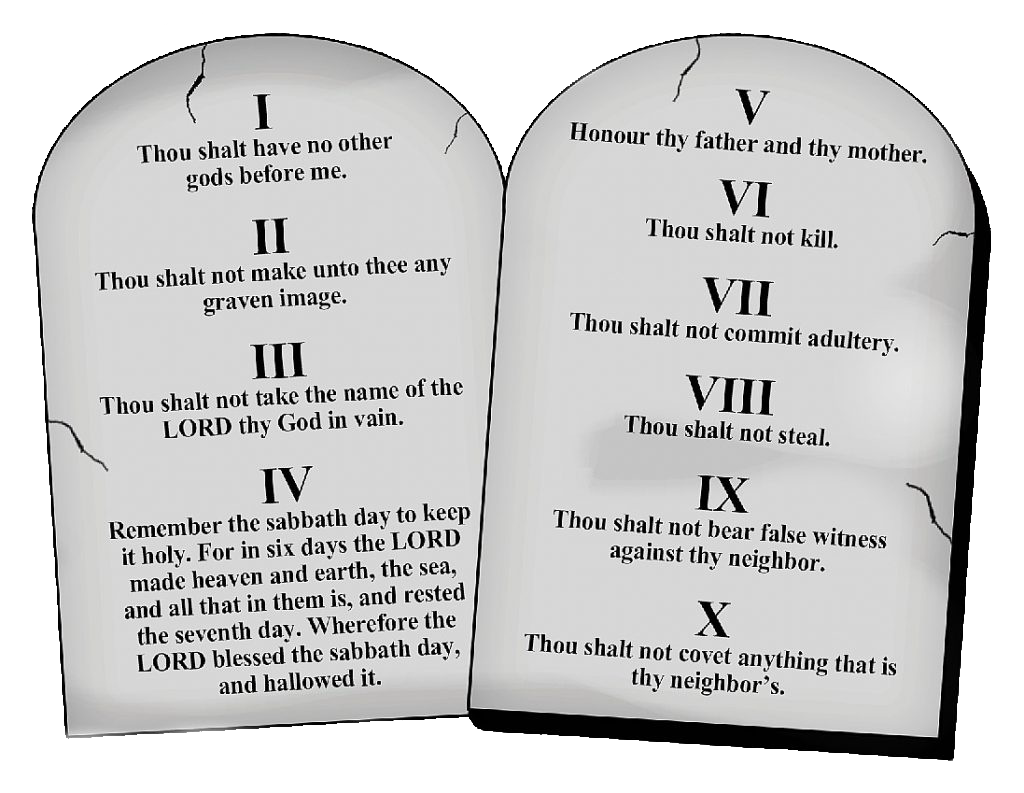
God gave Moses two stone tablets written with His own finger. The first tablet includes four commandments; these first four, as we find them in order in the Bible, are related to God:
1. you shall have no other gods….
2. you shall not make images (idolatry)
3. you shall not take the name of the Lord in vain
4. and you shall remember the Sabbath day, because God created the world in six days and rested on the seventh.
The second tablet includes six commandments; these are related to our relationship with other human beings:
5. You shall honor your father and your mother
6. You shall not kill
7. You shall not commit adultery
8. You shall not steal
9. You shall not bear false witness
10. You shall not covet.
Likewise, when our Savior said, “Love God and love your neighbor,” He was simply referring to the two tables of the commandments, not replacing the Ten Commandments with only two.
Furthermore, the Savior states in verse 40 of the same chapter: “On these two commandments hang all the Law and the Prophets” – (Matthew 22:40), making it even clearer that the entire law depends on these two commandments.
What does the bible say about the longevity of the law?
From what we can see, the law has been in effect for the entire world since the first week of creation. Now, what does the Bible say about how long we will remain under His holy law? Why would it disappear after 4,000 years at the sacrifice of Christ? Let us look at some verses that give us an idea of how long the law will remain in effect:
Exodus 31:17 (The Sabbath)
“It is a sign forever between Me and the children of Israel; for in six days the Lord made the heavens and the earth, and on the seventh day He ceased and rested.”
Ecclesiastes 12:13
“Let us hear the conclusion of the whole matter: Fear God and keep His commandments, for this is the whole duty of man.”
Isaiah 66:23
“And it shall come to pass that from one New Moon to another, and from one Sabbath to another, all flesh shall come to worship before Me,” says the Lord.
In this way, we see that the entire purpose of the human being is to keep the law, and that the Sabbath is a perpetual sign, in addition to being kept even in heaven, as Isaiah states. The church of the last days also keeps the commandments of God:
Revelation 12:17
“Then the dragon was enraged with the woman, and he went to make war with the rest of her offspring, who keep the commandments of God and have the testimony of Jesus Christ.”
Revelation 14:12
“Here is the patience of the saints; here are those who keep the commandments of God and the faith of Jesus.”
What about the passages that say "not under the law"?
Romans 6:14
“For sin shall not have dominion over you, for you are not under law but under grace.”
Romans 10:4
“For Christ is the end of the law for righteousness to everyone who believes.”
These verses, among others, have been taken by the evangelical world and their meaning has been distorted in order to completely discard obedience to God’s Ten Commandments; however, we must take into account the context and what Paul is really implying when he says, “we are not under the law.”
Could Paul contradict the Savior Himself, who declared, “Not one jot or one tittle will pass from the law”? This is far from the truth.
Could Paul contradict other inspired authors who say that there will be a judgment based on the law? (James 2:10–13).
Could Paul contradict John, who in his letters proclaims that the one who claims to know Jesus but does not keep His commandments is a liar, and the truth is not in him? (1 John 2:3–4).
The reality is that when Paul says, “we are not under the law,” he is referring to several key points: we are not under the condemnation of the law, nor are we under the law as a system to earn salvation.
The same author mentions in Romans chapter 6, verse 15: “What then? shall we sin, because we are not under the law, but under grace? God forbid.” Likewise, he repeats it in Romans chapter 3, verse 31: “Do we then make void the law through faith? God forbid: yea, we establish the law.”
If there is a Mark of the Beast, there is a Mark of God
Since the Bible warns us about a mark of authority of the beast; it also tells us what the mark of authority of the living God is.
Genesis 2:3 And God blessed the Seventh day and sanctified it, because in it He rested from all His work which He had done in creation.
This work, carried out in the FIRST WEEK of the world’s creation, has become a memorial that points us to the history of CREATION, and therefore points us to the CREATOR. Let’s see what the Bible tells us about this:
Exodus 31:17 (The Sabbath) is a SIGN forever between Me and the children of Israel; for in six days the Lord made the heavens and the earth, and on the seventh day He ceased and rested.
The Sabbath is a PERMANENT SIGN that shows us who the Creator is.

Earth's FINAL warning
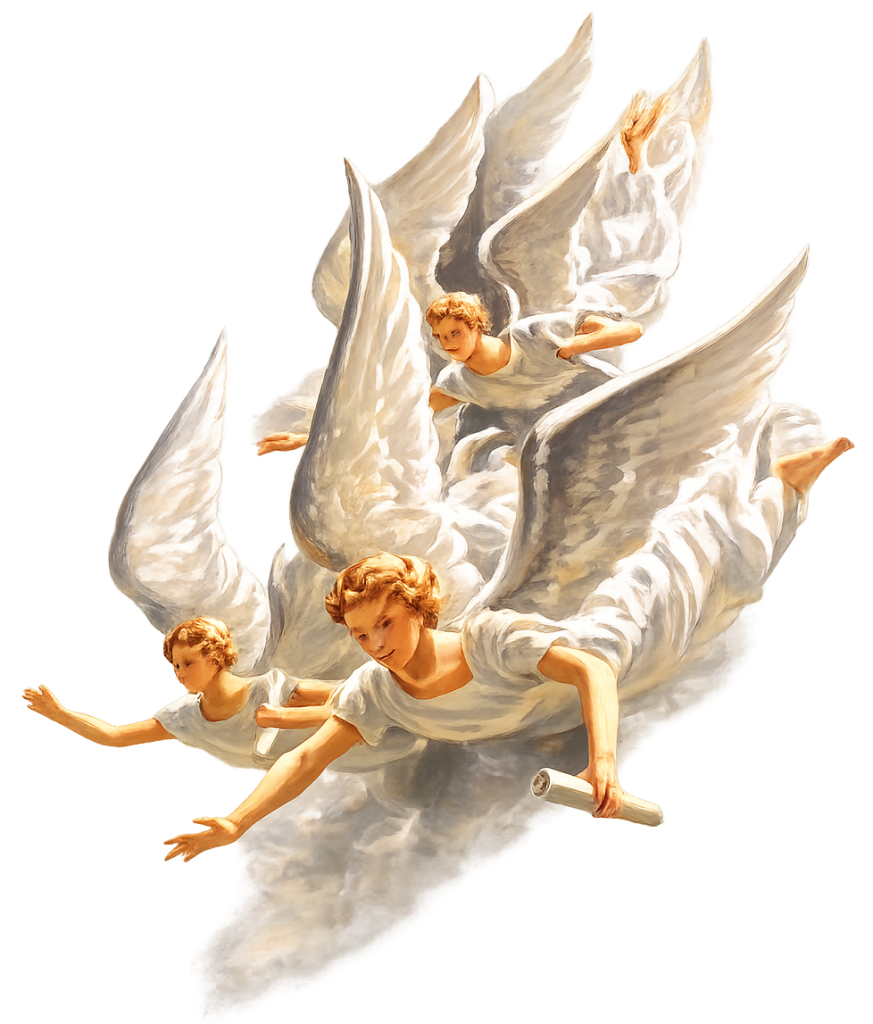
“And the third angel followed them, saying with a loud voice, If any man worship the beast and his image, and RECEIVE his mark in his forehead, or in his hand, The same shall drink of the wine of the wrath of God, which is poured out without mixture into the cup of his indignation; and he shall be tormented with fire and brimstone in the presence of the holy angels, and in the presence of the Lamb’” — (Revelation 14:9–10)
As part of the messages of the three angels in Revelation chapter 14, we are shown that the final message is a WARNING not to receive the mark of the beast. Those who receive it will take part in and experience the wrath of God upon them, which is manifested in the seven last plagues.
“And I saw another sign in heaven, great and marvellous, seven angels having the seven last plagues; for in them is filled up the wrath of God.” — (Revelation 15:1)
The Great Controversy.
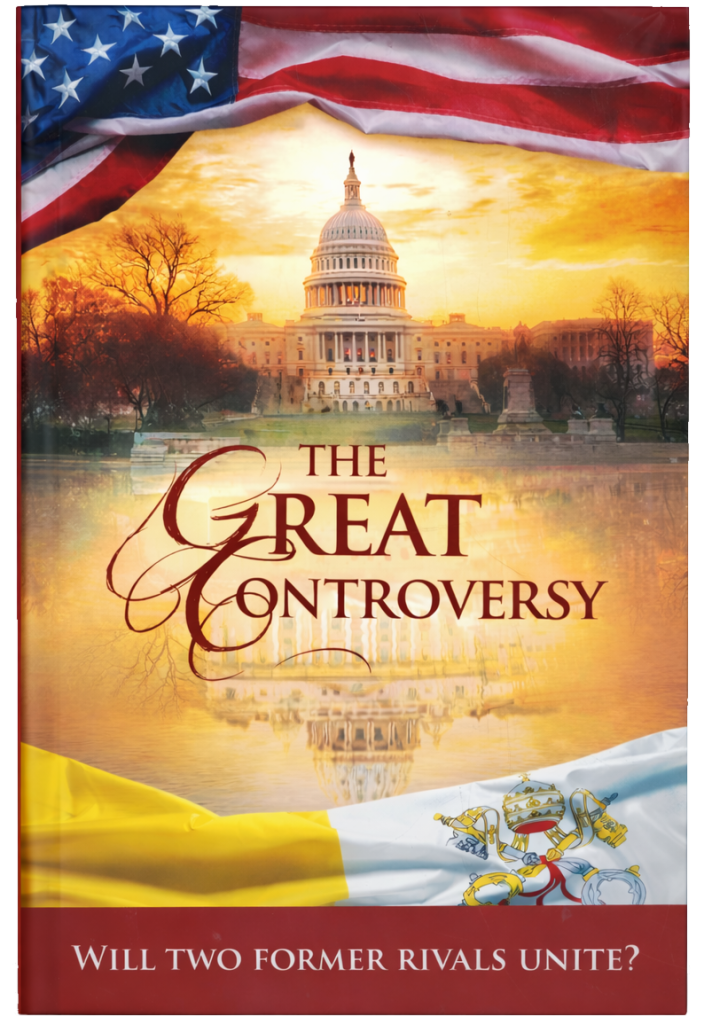
“When Sunday observance shall be enforced by law, and the world shall be enlightened concerning the obligation of the true Sabbath, then whoever shall transgress the command of God, to obey a precept which has no higher authority than that of Rome, will thereby honor popery above God. He is worshiping the beast and his image.”
— The Great Controversy

From the archaeological and historical evidence that demonstrates the Bible is a reliable and true document, to the most relevant end-time prophecies, the “Total Onslaught” series teaches us the methods of deception and assault used by Satan against Christ, and how the final events of this world will unfold.