Which power will enforce the Mark of the Beast?
The Bible speaks of a power that stands against the Creator; however, does the Bible give any indication of who this power is? Historians and theologians have identified that the Bible is very precise in pointing out who this opposing power is.
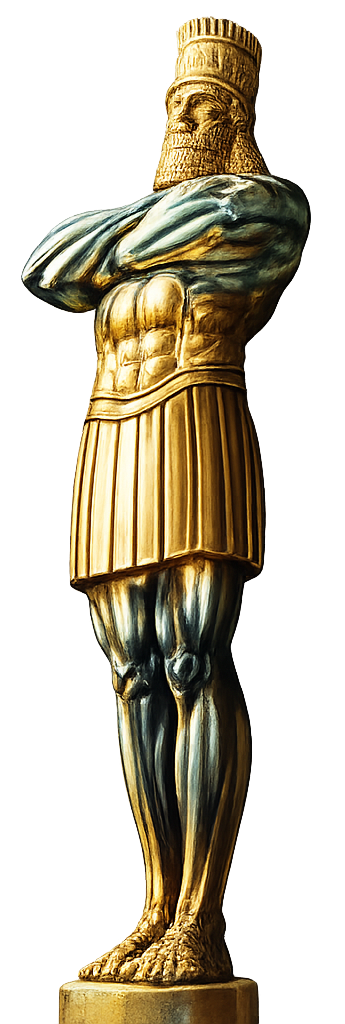
In the book of Daniel, chapter 2, King Nebuchadnezzar of Babylon receives a dream that neither magicians nor astrologers could interpret; however, Daniel, a servant of the Lord, with the help of the Creator, was able to interpret the dream that King Nebuchadnezzar had (Daniel 2:27–28).
The Bible tells us that Nebuchadnezzar’s dream was of an image. Daniel then begins to describe it as a statue with four parts:
1. A head of gold.
2. Chest and arms of silver.
3. Belly and thighs of bronze.
4. Legs of iron; and feet partly of iron and partly of baked clay.
Each part of the statue represented a kingdom that would come in succession. Let us see what the Bible tells us about each one:
Head of gold: Represents the Babylonian Empire (Daniel 2:38).
Chest and arms of silver: Represents the Medo-Persian Empire (a dual power; two arms representing two kingdoms, and connected to the ram of Daniel 8: “The ram which you saw, having the two horns—these are the kings of Media and Persia” —Daniel 8:20).
Belly and thighs of bronze: Represents the Greek Empire (represented by the male goat that comes after the ram in Daniel 8: “The male goat is the kingdom of Greece, and the large horn that is between its eyes is the first king” —Daniel 8:21).
Legs of iron: Represents the Roman Empire (historically following Greece; the toes represent the ten kingdoms into which Rome was divided after its fall).
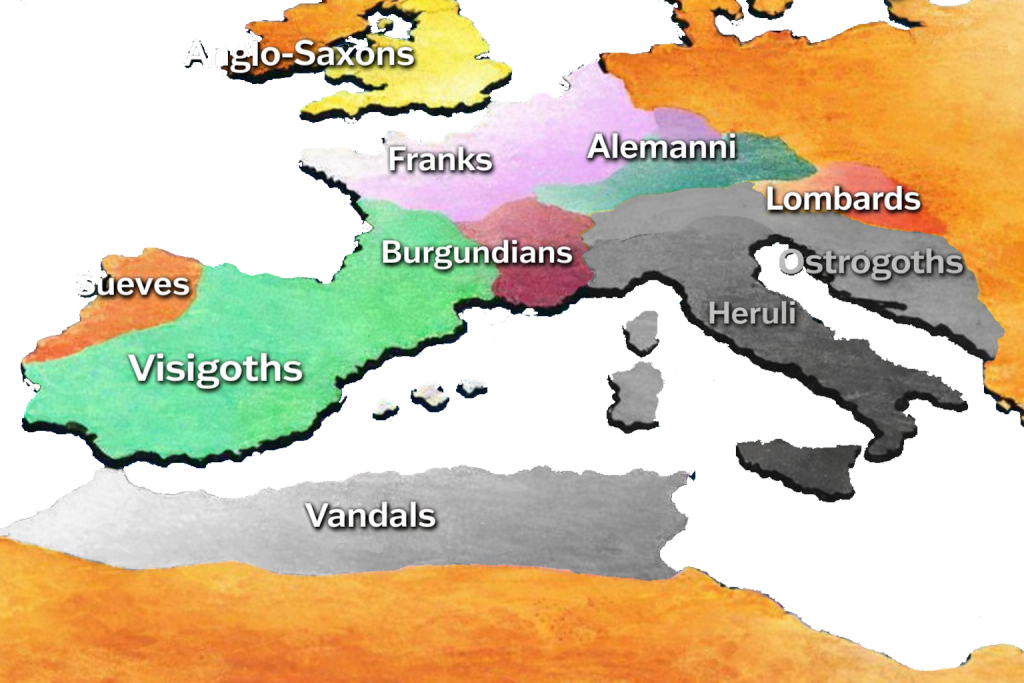
Feet of iron and baked clay: Represent the ten kingdoms into which Rome was divided after its fall. Among them were: the Anglo-Saxons, Franks, Alemanni, Burgundians, Visigoths, Suevi, Lombards, Heruli, Vandals, and Ostrogoths.
The connection between Daniel 2 and Daniel 7
“In the first year of Belshazzar king of Babylon, Daniel had a dream and visions of his head while on his bed… Daniel spoke, saying: I saw in my vision by night, and behold, the four winds of heaven were stirring up the Great Sea. And four great beasts, different from one another, came up from the sea.” —Daniel 7:1–3
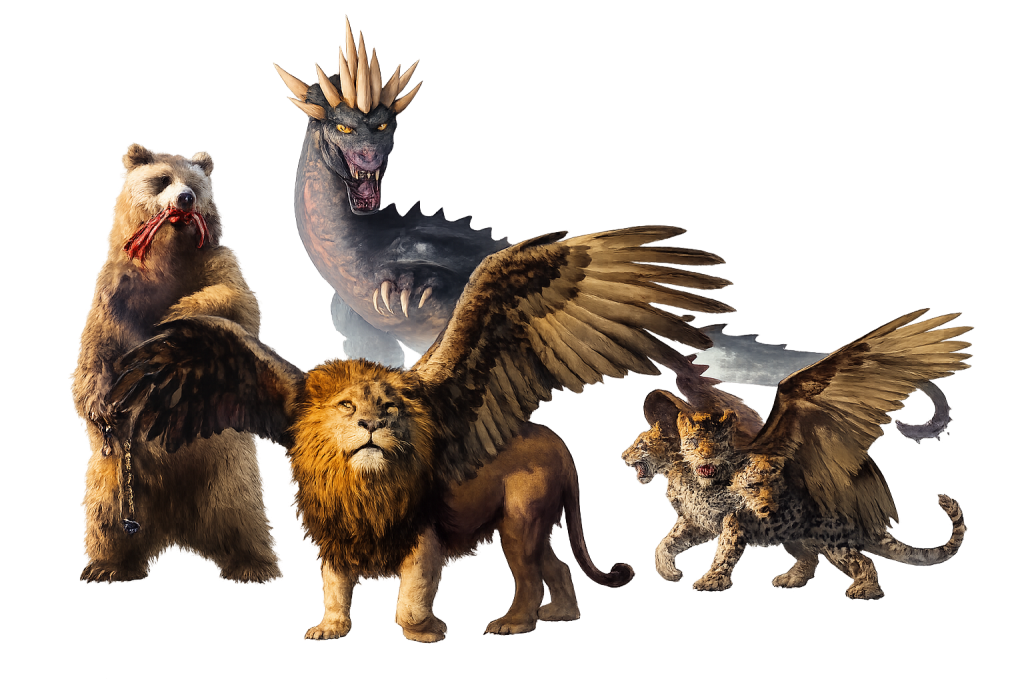
Once again, we see the same pattern found in Daniel 2: four parts of the statue, and now four beasts—each one with the same characteristics as in Daniel 2 and in the same historical order.
“The first was like a lion and had eagle’s wings… And behold, another beast, a second one, like a bear. It was raised up on one side, and it had three ribs in its mouth between its teeth… After this I looked, and behold, another, like a leopard, which had four wings of a bird on its back. The beast also had four heads, and dominion was given to it.” —Daniel 7:4–6
First beast like a lion: The Babylonian Empire (interestingly, the lion was always a special symbol in Babylon).
Second beast like a bear: The Medo-Persian Empire (it was raised up on one side more than the other, just as in the statue of Daniel 2 one arm is higher than the other; and just as in the ram of Daniel 8, where one horn is larger than the other. This represents that the Persians were stronger than the Medes).
Third beast like a leopard: The Greek Empire (historically follows the Medo-Persian Empire; it also has four heads, which are linked to the four horns of the male goat representing Greece in Daniel 8. These four heads or four horns represent the division of Greece among four generals after the death of Alexander the Great, the first king of Greece).
The fourth beast and the little horn

“After this I saw in the night visions, and behold a fourth beast, dreadful and terrible, and strong exceedingly; and it had great iron teeth: it devoured and brake in pieces, and stamped the residue with the feet of it: and it was diverse from all the beasts that were before it; and it had ten horns.” – Daniel 7:7

“And the ten horns out of this kingdom are ten kings that shall arise: and another shall rise after them; and he shall be diverse from the first, and he shall subdue three kings.” —Daniel 7:24
“And he shall speak great words against the most High, and shall wear out the saints of the most High, and think to change times and laws: and they shall be given into his hand until a time and times and the dividing of time..” —Daniel 7:25
With this description given in Daniel chapter 7 regarding the fourth beast, we have more than enough characteristics to identify who this power of the “little horn” is.
This little horn, we know, arises from the fourth beast, which is Rome. It cannot be any other power from another region; rather, it is specifically an extension of Europe. Theologians and historians have identified this little horn as the Vatican, the Roman Catholic Church, or the papacy.
“I considered the horns, and, behold, there came up among them another little horn, before whom there were three of the first horns plucked up by the roots: and, behold, in this horn were eyes like the eyes of man, and a mouth speaking great things.” —Daniel 7:8
“I considered the horns, and, behold, there came up among them another little horn, before whom there were three of the first horns plucked up by the roots: and, behold, in this horn were eyes like the eyes of man, and a mouth speaking great things.” —Daniel 7:8
“And the ten horns out of this kingdom are ten kings that shall arise: and another shall rise after them; and he shall be diverse from the first, and he shall subdue three kings.” —Daniel 7:24
“And he shall speak great words against the most High, and shall wear out the saints of the most High, and think to change times and laws: and they shall be given into his hand until a time and times and the dividing of time..” —Daniel 7:25
With this description given in Daniel chapter 7 regarding the fourth beast, we have more than enough characteristics to identify who this power of the “little horn” is.
This little horn, we know, arises from the fourth beast, which is Rome. It cannot be any other power from another region; rather, it is specifically an extension of Europe. Theologians and historians have identified this little horn as the Vatican, the Roman Catholic Church, or the papacy.
"He shall subdue three kings"
This prophetic characteristic was fulfilled between the 5th and 6th centuries. The first kingdom to be defeated was the Heruli in A.D. 493, followed by the Vandals in A.D. 534, and the Ostrogoths in A.D. 538.
Interestingly, these three kingdoms were destroyed under orders influenced by Rome: the Heruli were destroyed by Theodoric, king of the Ostrogoths, acting under orders from the Roman emperor Zeno.
The last two kingdoms—the Vandals and the Ostrogoths—were destroyed under orders from the Roman emperor Justinian I. After the defeat of the Ostrogoths in A.D. 538, the papacy was free from opposition and was finally able to carry out Justinian’s decree issued in A.D. 533, which established the bishop of Rome as the head of all the churches.
"Shall be given into his hand for a time, times and half of time "
“The church resorted to civil power to sustain its dogmas, and thus persecution began. Those who dared to follow the Word of God were persecuted as criminals.”
— The Great Controversy, p. 54
“The fury of the emperors was directed more particularly against the Christians… The tortures inflicted upon them were often refined, and the deaths of the martyrs were public spectacles intended to instill terror in the hearts of the people.”
— Gibbon, Vol. I, Ch. XV
“The saints and confessors of the Church who refused to obey the corrupt decrees of Rome suffered exile, confiscation, and often death… The terror inflicted upon them was both political and religious, with the aim of controlling the conscience itself.”
— Lea, Vol. I, Ch. III
We do not need to go further into context to understand the terrible persecutions committed by the Catholic Church against those who opposed its doctrine. The prophetic declaration “They shall be given into his hand” refers to the saints and to the world as a whole. It also gives us a time period: a time, times, and half a time.
This time period is mentioned six times in the Bible (Dan 7:25; Dan 12:7; Rev 11:2–3; Rev 12:6; Rev 12:14; and Rev 13:5), where the same time span is expressed using different units: days, months, and years.
The expression “a time, times, and half a time” refers to one year, two years, and half a year, totaling 3.5 years. We can conclude this with great confidence because this time period is always mentioned in connection with the persecution of the saints and is presented in different forms, such as 1,260 days (Revelation 12:6) or 42 months (Revelation 13:5). A prophetic biblical year consists of 360 days.
Now, when the Bible gives prophetic time periods, we must apply the day-for-a-year principle (Ezekiel 4:6; Numbers 14:34). In this case, the 1,260 days correspond to 1,260 years.
As we saw earlier, the decree of Justinian issued in A.D. 533 was finally enforced in A.D. 538 without opposition, thanks to the elimination of the Ostrogoths. From this point onward, the Roman Catholic Church could exercise its power without restriction and began to persecute the saints with much greater force. The year A.D. 538 marks the beginning of the 1,260 prophetic years. This period would end in 1798, when the papacy was overthrown as a result of the French Revolution.
“From the year 538, when the papacy was established, 1,260 years extend to 1798; and it is a notable historical fact that on February 10, 1798, Berthier, a general of Bonaparte, at the head of the French republican army, entered Rome and took it. The papal government was abolished, and the pope died in exile in 1799.”
— Key to Prophetic Chart, 15.2
"And think to change times and laws"
From the expression “He shall speak words against the Most High,” we can determine that this power is blasphemous. The word blasphemy is used in only two different contexts in the Bible: the first is claiming the authority to forgive sins (Mark 2:5–7). The second is claiming to be God (John 10:30–33).
“Only God forgives sins. But the priest represents Christ… and through the ministry of the Church, God grants the forgiveness of sins.”
— Catechism of the Catholic Church (CCC 1441)
Wait a moment—does the priest represent Christ? Did not the Savior Himself say, “No one comes to the Father except through Me”? The Bible makes it clear that our High Priest is now Christ Himself: “Therefore, since we have a great High Priest who has passed through the heavens, Jesus the Son of God” —Hebrews 4:14.
Does the Bible not also say that the only mediator between God and humanity is Christ Himself? “For there is one God and one Mediator between God and men, the Man Christ Jesus” —1 Timothy 2:5.
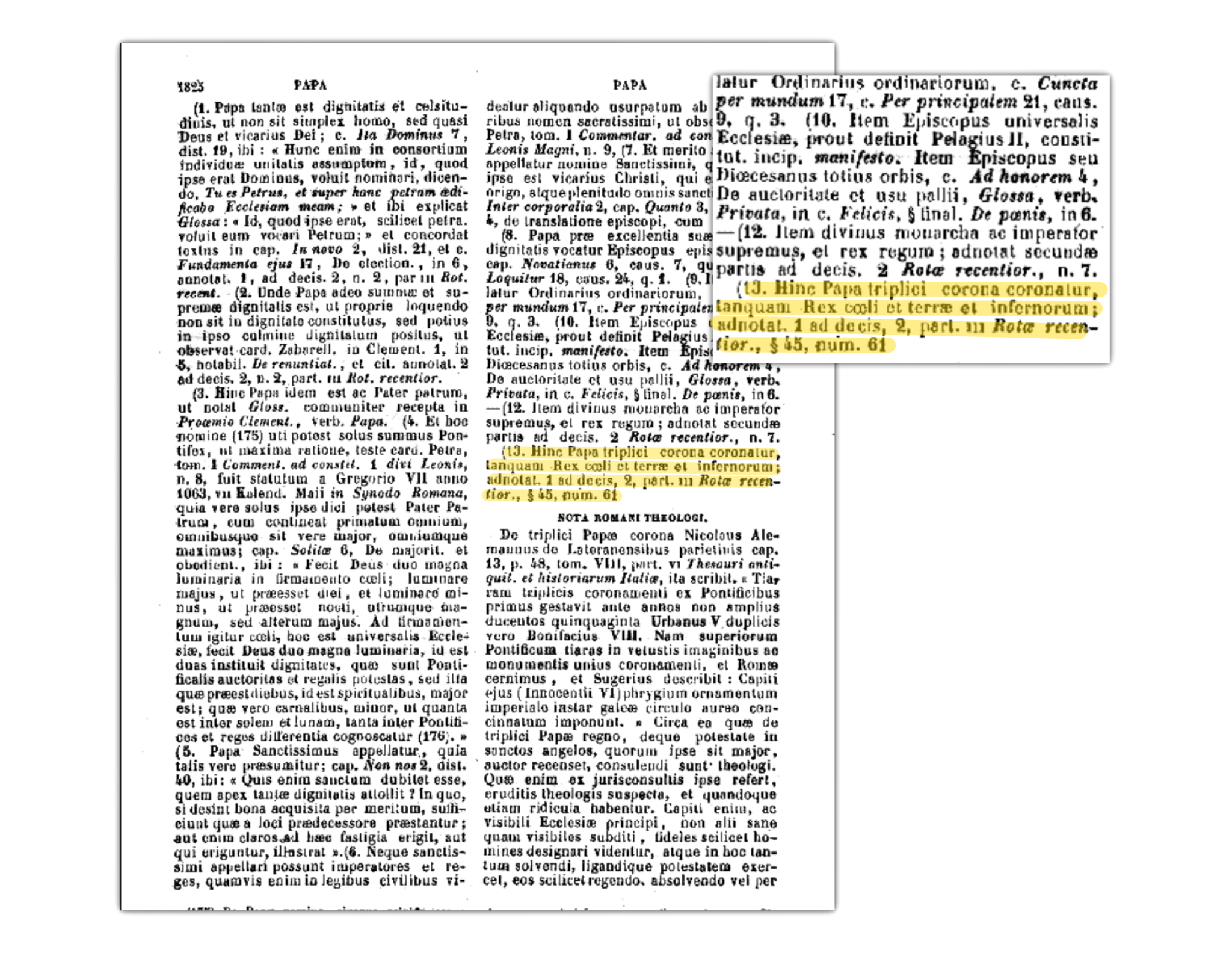
Is this not placing oneself in the position that is determined only for God? Declaring to have the power to forgive sins, which only the Savior (being God) had authority to do, and likewise calling oneself God, with power over heaven, the earth, and hell.
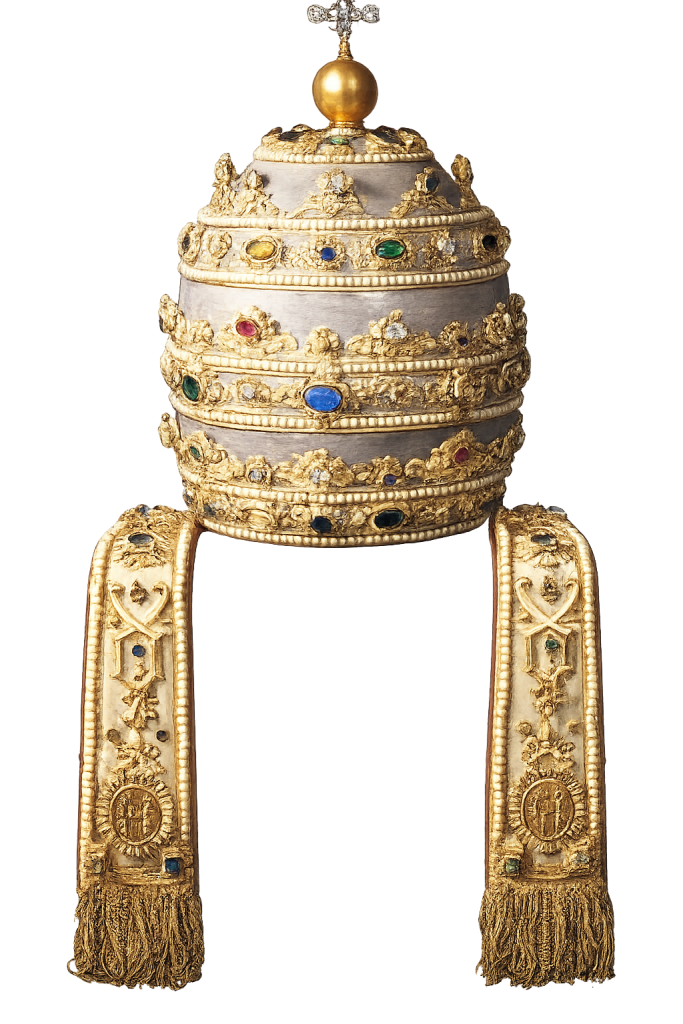
The popes have also used something called the “papal tiara” which consists of three crowns. Let us allow them to explain the meaning of its symbolism themselves:
“Therefore the Pope is crowned with a triple crown, as king of heaven, of earth, and of hell.”
— Prompta Bibliotheca
The popes have also used something called the “papal tiara,” which consists of three crowns. Let us allow them to explain the meaning of its symbolism themselves:
“Therefore the Pope is crowned with a triple crown, as king of heaven, of earth, and of hell.”
— Prompta Bibliotheca
The Catholic Church also declares:
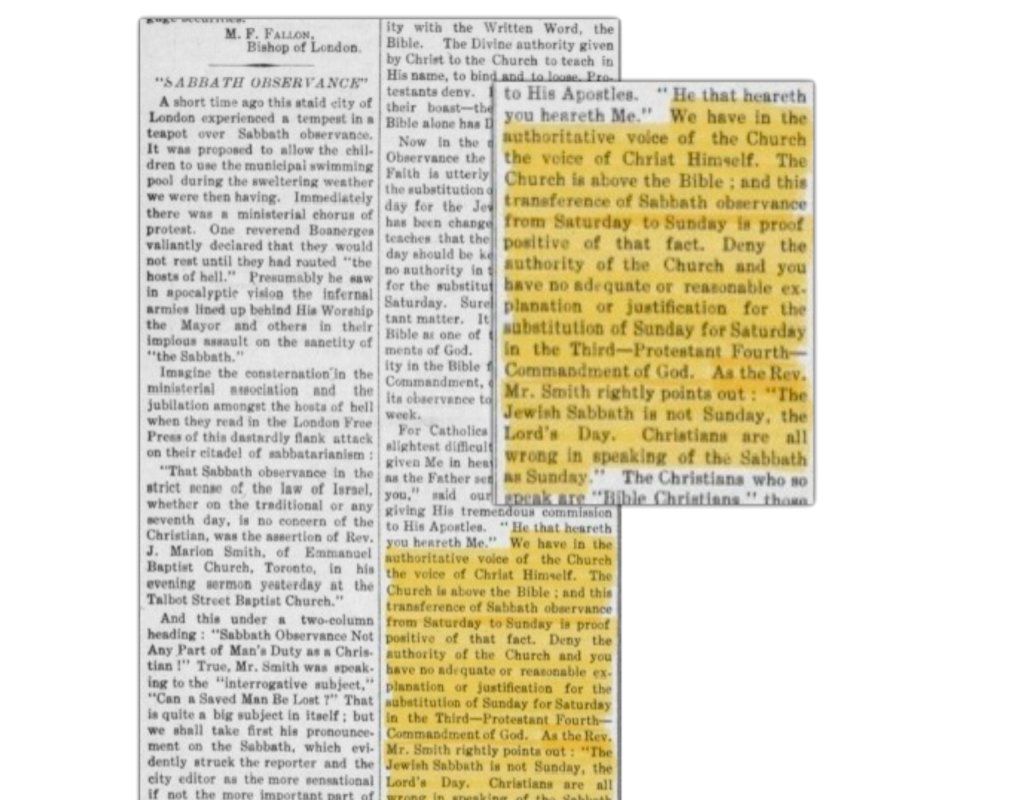
“We have the authoritative voice of Christ Himself in the Church. The Church is above the Bible; and this change from Sabbath to Sunday is proof of that fact. If the authority of the Church were rejected, there would be no explanation or justification for the substitution of the Sabbath for Sunday in the third–Protestant–fourth commandment of God.”
— Catholic Record, September 1, 1923, London
“The majority of Christians assume that Sunday is the biblically approved day of worship. The Roman Catholic Church protests that it has transferred Christian worship from the biblical Sabbath to Sunday, and attempting to argue that this change was made in the Bible is dishonest and a denial of Catholic authority. If Protestants want to base their teachings solely on the Bible, they should worship on the Sabbath.”
— Rome’s Challenge
“We observe Sunday instead of the Sabbath because the Catholic Church has transferred the solemnity from the Sabbath to Sunday.”
— The Convert’s Catechism of Catholic Doctrine (1957), p. 50
“The Bible STILL teaches that the Sabbath, or Saturday, must be sanctified. There is no authority in the New Testament for the substitution of the Sabbath with Sunday. It is maintained in the Bible as one of the Ten Commandments of God. There is no authority in the Bible abrogating this commandment, nor to transfer worship from the Sabbath to another day.”
— Catholic Record, September 1, 1923, London
This is total blasphemy, declaring that the Church has the power to change the laws that God has already established. However, we already have evidence of the first characteristic in the paradigm of the change of laws and times spoken of in the book of Daniel. We will now see what other prominent law the Catholic Church has changed:
The Ten Commandments in the Bible vs in the Catechism
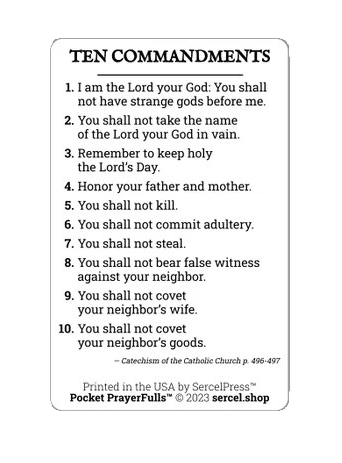
“Saint Augustine combined what Protestants call the first and second commandments (about God and the making of images), and divided the tenth commandment into two.”
— Aquinas, Summa Theologica, II–II, Q.100, Art. 8
This is the excuse the Catholic Church uses for the elimination of the second commandment. As you can see in the image, the Ten Commandments are listed as found in the catechism. The question is: what is the need to combine the first and second commandments, not making the second explicit, but instead hiding it?
Can God repeat Himself? I encourage every reader to open ANY Bible, even a Catholic one, go to chapter 20 of the book of Exodus, and tell me whether God does not say “You shall not covet” in general, and also “You shall not covet your neighbor’s wife” within the same commandment. If this is the case, what would be the need to eliminate the second commandment and make God repeat Himself in two commandments that say the same thing about not coveting?
This is how the commandment is stated in the Bible:
“You shall not covet your neighbor’s house; you shall not covet your neighbor’s wife, nor his male servant, nor his female servant, nor his ox, nor his donkey, nor anything that belongs to your neighbor.”
Is this not a tactic to bypass the commandment against making images? I believe that, if we are honest, it is, and it is a very clever and dishonest tactic.
This is the excuse the Catholic Church uses for the elimination of the second commandment. As you can see in the image, the Ten Commandments are listed as found in the catechism. The question is: what is the need to combine the first and second commandments, not making the second explicit, but instead hiding it?
Can God repeat Himself? I encourage every reader to open ANY Bible, even a Catholic one, go to chapter 20 of the book of Exodus, and tell me whether God does not say “You shall not covet” in general, and also “You shall not covet your neighbor’s wife” within the same commandment. If this is the case, what would be the need to eliminate the second commandment and make God repeat Himself in two commandments that say the same thing about not coveting?
This is how the commandment is stated in the Bible:
“You shall not covet your neighbor’s house; you shall not covet your neighbor’s wife, nor his male servant, nor his female servant, nor his ox, nor his donkey, nor anything that belongs to your neighbor.”
Is this not a tactic to bypass the commandment against making images? I believe that, if we are honest, it is, and it is a very clever and dishonest tactic.
“Saint Augustine combined what Protestants call the first and second commandments (about God and the making of images), and divided the tenth commandment into two.”
— Aquinas, Summa Theologica, II–II, Q.100, Art. 8
The first beast of revelation 13 and the little horn are the same entity
“And I stood upon the sand of the sea, and saw a beast rise up out of the sea, having seven heads and ten horns, and upon his horns ten crowns, and upon his heads the name of blasphemy.” – Revelation 13:1
These characteristics that we see in the first beast of Revelation are the same ones found in the four beasts of Daniel 7; however, now they are all merged into a single one. This represents that, first, by this point the history of these beasts will already have taken place, and second, that this combined power has a bit of each beast: philosophy, ideologies, brutality, and power.
We identify that the first beast of Revelation 13 is connected to the little horn of Daniel 7, since these two entities share the same characteristics: a blasphemous power, a deadly wound, exalts itself above God and assumes to sit on His throne, persecutes the saints, and especially reigns for the same period of 3.5 years — 42 months — 1260 days.
Taking this factor into account, we know that the little horn has been identified as the VATICAN — THE ROMAN CATHOLIC CHURCH — THE PAPACY. Therefore, we conclude that: the little horn = the first beast of Revelation 13. Both are the same power.
“And I stood upon the sand of the sea, and saw a beast rise up out of the sea, having seven heads and ten horns, and upon his horns ten crowns, and upon his heads the name of blasphemy.” – Revelation 13:1
These characteristics that we see in the first beast of Revelation are the same ones found in the four beasts of Daniel 7; however, now they are all merged into a single one. This represents that, first, by this point the history of these beasts will already have taken place, and second, that this combined power has a bit of each beast: philosophy, ideologies, brutality, and power.

We identify that the first beast of Revelation 13 is connected to the little horn of Daniel 7, since these two entities share the same characteristics: a blasphemous power, a deadly wound, exalts itself above God and assumes to sit on His throne, persecutes the saints, and especially reigns for the same period of 3.5 years — 42 months — 1260 days.
Taking this factor into account, we know that the little horn has been identified as the VATICAN — THE ROMAN CATHOLIC CHURCH — THE PAPACY. Therefore, we conclude that: the little horn = the first beast of Revelation 13. Both are the same power.
How is Sunday worship linked to 666?
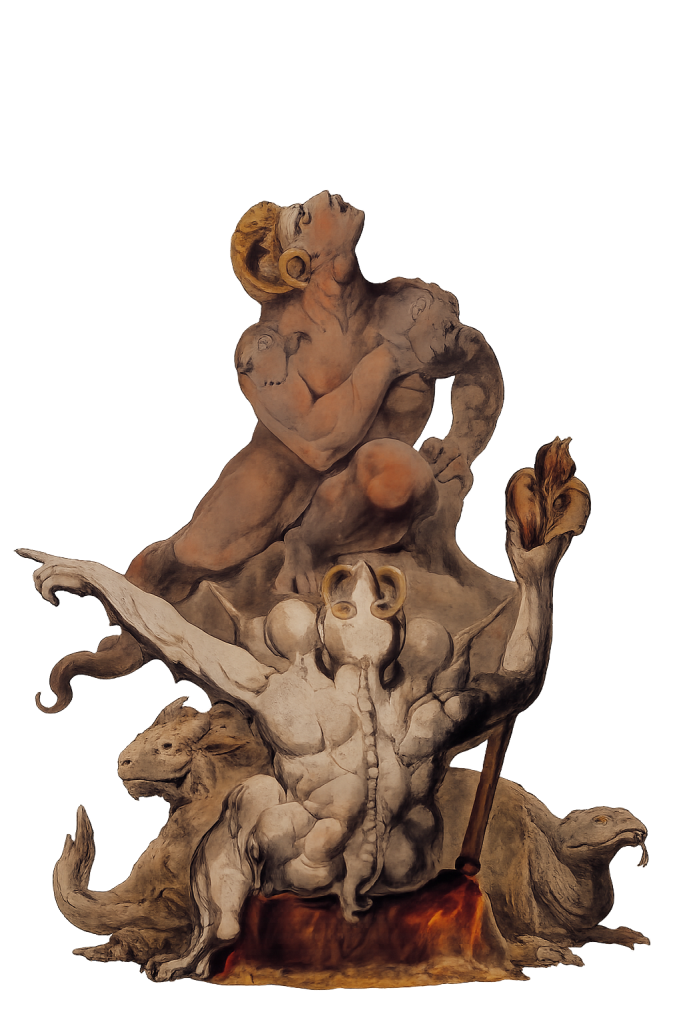
“Here is wisdom. Let the one who has understanding calculate the number of the beast, for it is the number of a man. And his number is six hundred sixty-six.” – Revelation 13:18
History shows that Babylonian priests used amulets to represent the cosmos. One of the most prominent amulets was connected to the sun god. On the front of the amulet, we could see the image of the sun above the Babylonian lion.
On the back there was something known in numerology as the “magic square of the Sun,” which had six boxes horizontally and vertically, each box containing a number. When adding the results of the six boxes, we end up with the number 666.
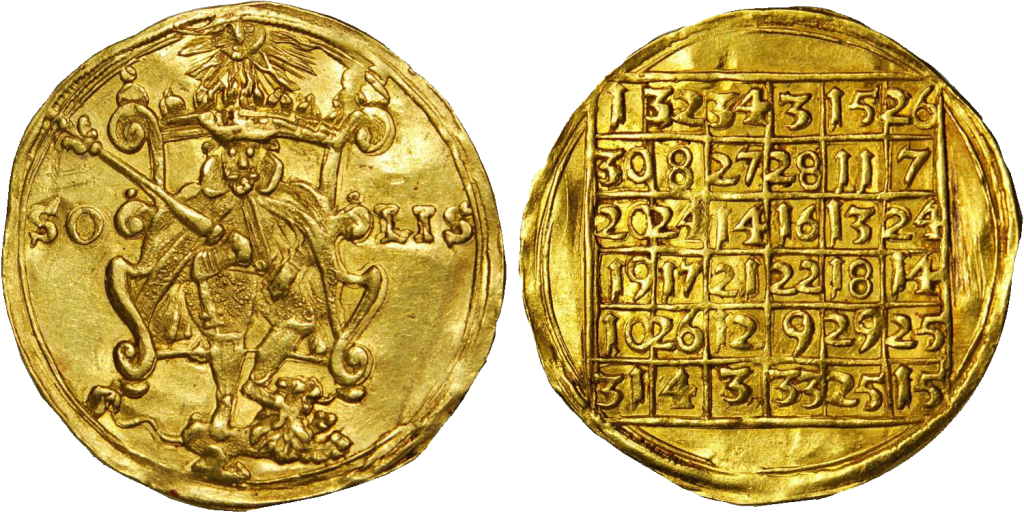
It is interesting that the Roman Catholic Church venerates the day of the sun (Sunday) and claims that this is its mark of authority. In addition, many popes have used the title “Pontifex Maximus”, which in Latin means “supreme pagan priest,” a title given to the highest-ranking priests in Babylon. In conclusion, the number 666 is rooted in sun worship, and the Church has a history of pagan origin.
How will the Mark of the Beast be enforced?

The Bible tells us that the mark of the beast will have a primary factor: commerce.
“And that no man might buy or sell, save he that had the mark, or the name of the beast, or the number of his name.” (Revelation 13:17)
Those who choose to stand firm with God and keep His holy Sabbath will be penalized and will have their ability to buy and sell taken away.
We currently live in a digital age in which we are getting closer and closer to conducting business only through bank transfers, credit cards, and other digital methods, while cash is disappearing.
With only digital means of commerce, it eventually becomes much easier for authorities to freeze bank accounts, leaving people without the ability to trade, especially if we reach a cashless society.
How will the Mark of the Beast be enforced?
The Bible tells us that the mark of the beast will have a primary factor: commerce.
“And that no man might buy or sell, save he that had the mark, or the name of the beast, or the number of his name.” (Revelation 13:17)
Those who choose to stand firm with God and keep His holy Sabbath will be penalized and will have their ability to buy and sell taken away.
We currently live in a digital age in which we are getting closer and closer to conducting business only through bank transfers, credit cards, and other digital methods, while cash is disappearing.
With only digital means of commerce, it eventually becomes much easier for authorities to freeze bank accounts, leaving people without the ability to trade, especially if we reach a cashless society.

The Great Controversy.
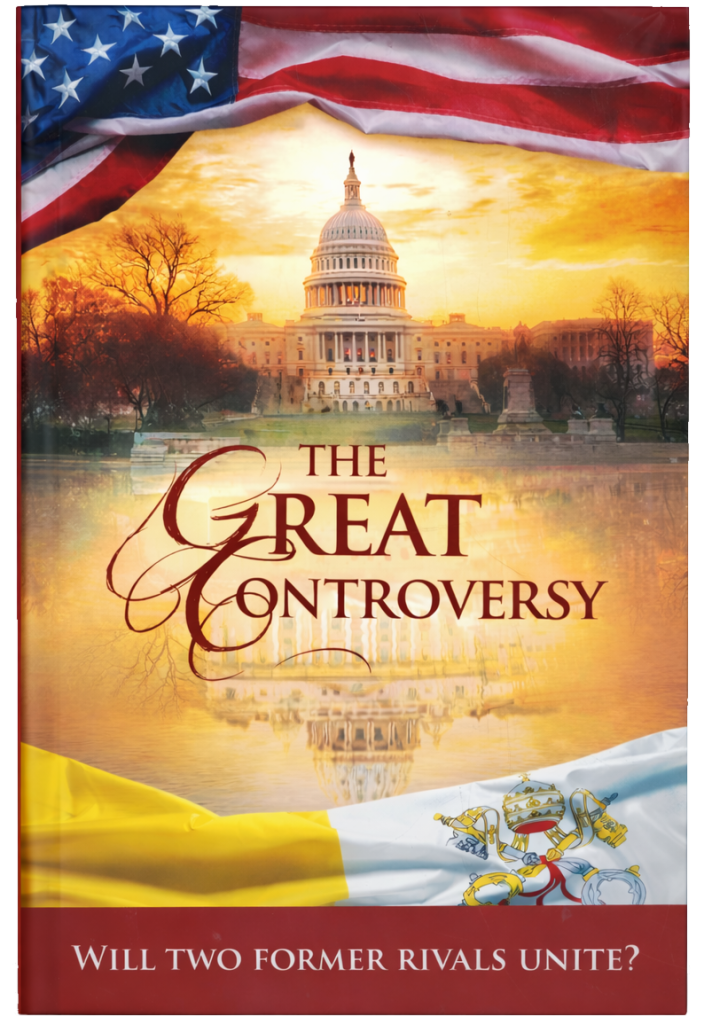
“When Sunday observance shall be enforced by law, and the world shall be enlightened concerning the obligation of the true Sabbath, then whoever shall transgress the command of God, to obey a precept which has no higher authority than that of Rome, will thereby honor popery above God. He is worshiping the beast and his image.”
— The Great Controversy

From the archaeological and historical evidence that demonstrates the Bible is a reliable and true document, to the most relevant end-time prophecies, the “Total Onslaught” series teaches us the methods of deception and assault used by Satan against Christ, and how the final events of this world will unfold.